
Construction and associated trades
Multilingual online modules for businesses across the DACH region – with no commitment, including a knowledge test and a certificate upon successful completion. Filter by your sector or search for specific modules.
1 - 12 out of 16 courses
Courses per page
12

Heat and UV Protection
Heat warning levels, UV index, heat stroke, sunstroke, heat protection plan and UV protective clothing. This online safety instruction on heat and UV protection teaches employees on construction sites and outdoor workplaces the most important rules for working in heat and strong sunlight in a compact and practical way. It explains the heat warning levels of GeoSphere Austria, shows how heat-related illnesses are recognised and presents the protective measures according to the STOP principle. Who is this training for? This mandatory instruction is aimed at employees who work on construction sites or at other outdoor workplaces, as well as at supervisors who plan work in hot conditions. It is suitable as initial instruction for new employees and as annual safety instruction for refresher purposes. What do participants learn? The online instruction covers the key hazards of heat and UV radiation in construction and the mandatory protective measures. An overview of the contents: Hazards and warning levels: dehydration, heat cramps, accident risk due to lack of concentration, skin cancer and eye damage, heat warning levels and UV index Recognising heat-related illnesses: symptoms of dehydration, heat stroke and sunstroke, buddy system, first aid and emergency call Organisational measures: heat protection plan, fluid intake, breaks in the shade, adjusting working hours, job rotation, prefabrication in the shade Technical measures: shading of work and break areas, air-conditioned driver's cabs and break rooms, lifting aids, water misting Personal protective equipment: UV protective clothing, hard hat with neck protection, sunglasses, sunscreen "Hitze-60er": requirements for the bad weather regulation in hot conditions for employees covered by BUAK Instruction under the ASchG & proof of completion The content is based on the obligation to provide instruction under Section 14 of the Austrian Workers' Protection Act (ArbeitnehmerInnenschutzgesetz, ASchG) as well as on the Heat Protection Ordinance (Hitzeschutzverordnung, Hitze-V) and the Construction Workers' Protection Ordinance (Bauarbeiterschutzverordnung, BauV). After completing the course, participants receive a certificate documenting the completed safety instruction. The training is also ideal as a supplement to in-person instruction.20 languages
From €10.00Excl. VAT
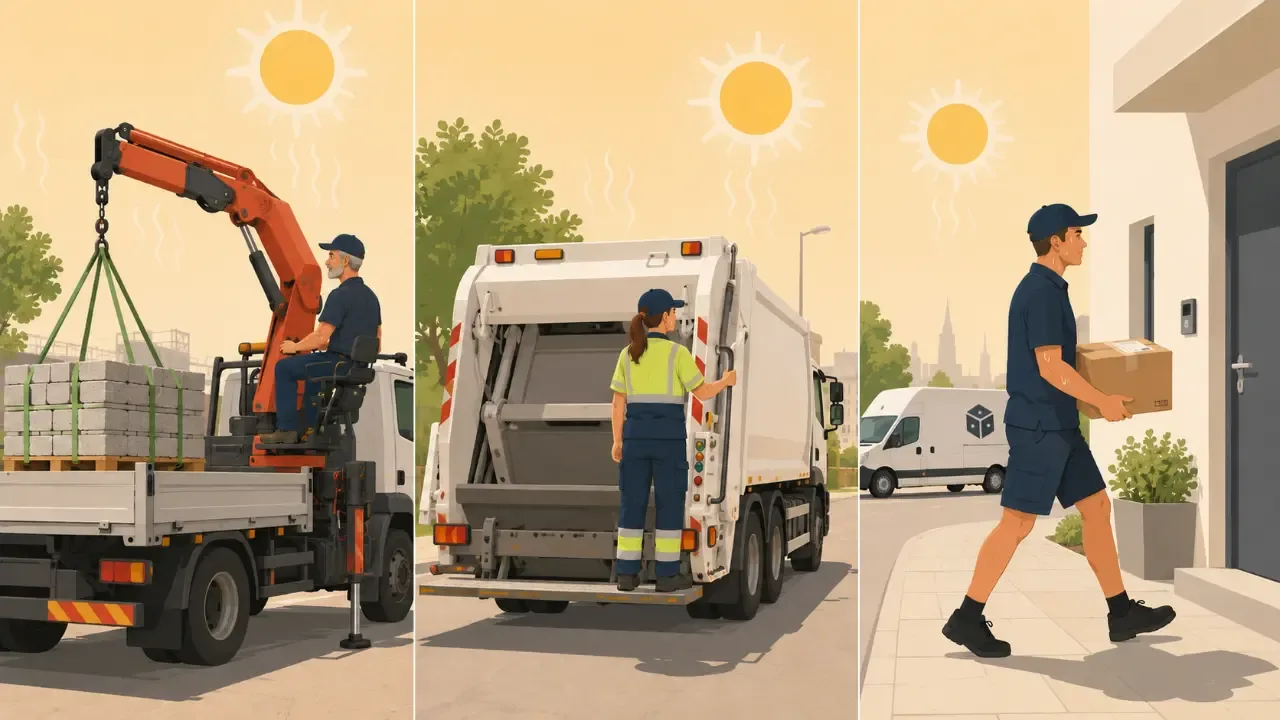
Heat and UV Protection in Transport
Heat warning levels, vehicle air conditioning, heat stroke, sunstroke, UV index and heat protection plan. This online safety instruction on heat and UV protection in the transport industry teaches employees the most important rules for working in heat and strong sunlight in a compact and practical way. It explains the heat warning levels of GeoSphere Austria, shows how heat-related illnesses are recognised and presents the protective measures according to the STOP principle, from sun protection in the vehicle to the correct use of air conditioning. Who is this training for? This mandatory instruction is aimed at employees in the transport industry who work in the vehicle or outdoors in hot conditions, as well as at supervisors who plan work in hot conditions. It is suitable as initial instruction for new employees and as annual safety instruction for refresher purposes. What do participants learn? The online instruction covers the key hazards of heat and UV radiation in the transport industry and the mandatory protective measures. An overview of the contents: Hazards and warning levels: dehydration, heat cramps, accident risk due to lack of concentration, skin cancer and eye damage, heat warning levels and UV index Recognising heat-related illnesses: symptoms of dehydration, heat stroke and sunstroke, buddy system, first aid and emergency call Organisational measures: heat protection plan, fluid intake, breaks in the shade or in the air-conditioned driver's cab, adjusting working hours, job rotation Heat protection in the vehicle: sun blinds, parking in the shade, setting and maintaining the air conditioning correctly, avoiding draughts Personal protective equipment: UV protective clothing, head covering, sunglasses, sunscreen Instruction under the ASchG & proof of completion The content is based on the obligation to provide instruction under Section 14 of the Austrian Workers' Protection Act (ArbeitnehmerInnenschutzgesetz, ASchG) as well as on the Heat Protection Ordinance (Hitzeschutzverordnung, Hitze-V). After completing the course, participants receive a certificate documenting the completed safety instruction. The training is also ideal as a supplement to in-person instruction.20 languages
From €10.00Excl. VAT
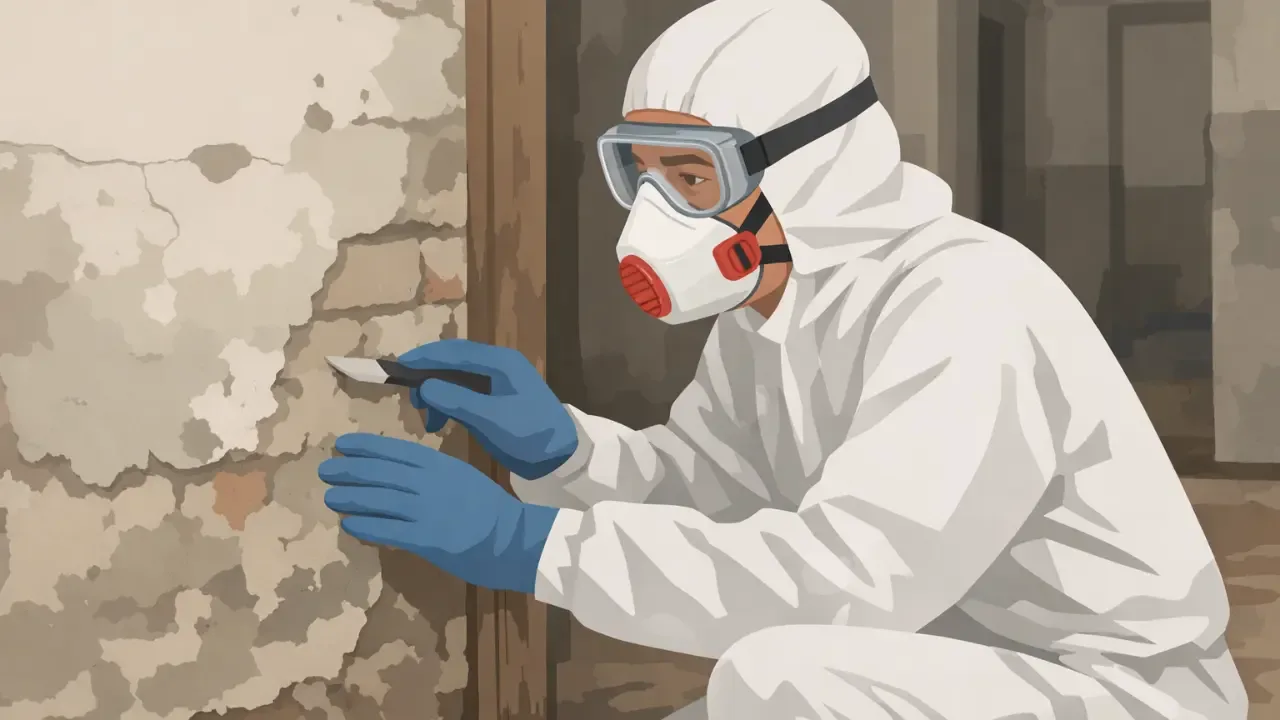
Tightly bound asbestos
Identifying asbestos cement, low-dust removal, H-class vacuum, FFP3, airlock, work plan and disposal. This online safety instruction on the safe handling of firmly bound asbestos teaches the most important rules for working with asbestos-containing materials such as asbestos cement sheets in a compact way. It explains the health hazards of asbestos fibres and shows low-dust working methods as well as protective measures according to the TOP principle. Who is this training for? This mandatory instruction is aimed at employees who may come into contact with firmly bound asbestos during removal, refurbishment or conversion work. It is suitable as initial instruction before starting the work and as annual safety instruction for refresher purposes. The training also points out the employment bans for young people, pregnant women and breastfeeding mothers. What do participants learn? The online instruction covers the key hazards and protective measures. A particular focus is on preventing asbestos dust. An overview of the contents: Recognising hazards: asbestosis and mesothelioma, effect of smoking, clarifying suspected asbestos Low-dust working: non-destructive removal, constant wetting, H-class vacuum, ban on cut-off wheels, cleaning tools TOP principle: work plan, competent responsible person, suitable work equipment, cordoning off the work area Personal protective equipment: disposable coverall, FFP3 mask or full-face mask with P3 filter, protective gloves, tight-fitting safety goggles, overshoes Working indoors: dust-tight enclosure, entering and leaving through the single-chamber airlock Disposal and emergencies: asbestos big bags, licensed waste contractors, conduct in the event of unexpected release and after asbestos contact Instruction under the ASchG & proof of completion The content is based on the obligation to provide instruction under Section 14 of the Austrian Workers' Protection Act (ArbeitnehmerInnenschutzgesetz, ASchG). In addition, health surveillance under the Ordinance on Health Surveillance at the Workplace (Verordnung über die Gesundheitsüberwachung am Arbeitsplatz, VGÜ) is covered. After completing the course, participants receive a certificate documenting the completed safety instruction. The training serves as support for the in-person instruction by the company's competent person and does not replace it.12 languages
From €10.00Excl. VAT

Construction Site General Safety Information
Trestle scaffolding, ladders, temporary site power, quartz dust, hot work and PPE. This online safety instruction for the construction site teaches employees the most important safety rules for everyday work in construction in a compact and practical way. It ranges from general rules of conduct and site access to ladders, scaffolding and electrical safety, hazardous substances and personal protective equipment. Who is this training for? This mandatory instruction is aimed at employees who work on construction sites, regardless of their trade. It is suitable as initial instruction for new employees and as annual safety instruction for refresher purposes. What do participants learn? The online instruction covers the key topics of occupational safety on the construction site. A particular focus is on working safely with ladders and scaffolding. An overview of the contents: Scaffolding: trestle scaffolding, planks and edge overhang, self-built scaffolding, mobile aluminium scaffold towers, fall protection, approval and inspection Ladders: leaning ladders and stepladders, angle of inclination, setting up near floor openings Electrical safety: construction site distribution boards, residual current devices (RCDs), cable reels, step voltage and conduct in electrical accidents Work equipment and tools: visual inspection, protective devices, machines with saw blades, cutting hazards, hot work Health in construction: quartz dust, cement and hazardous substances, lifting and carrying, heat and sun protection, load securing Personal protective equipment: S3 safety shoes, safety glasses, protective gloves, hearing protection, FFP2 and FFP3 dust masks Instruction under the ASchG & proof of completion The content is based on the obligation to provide instruction under Section 14 of the Austrian Workers' Protection Act (ArbeitnehmerInnenschutzgesetz, ASchG). After completing the course, participants receive a certificate documenting the completed safety instruction. The training is also ideal as a supplement to in-person instruction.12 languages
From €10.00Excl. VAT
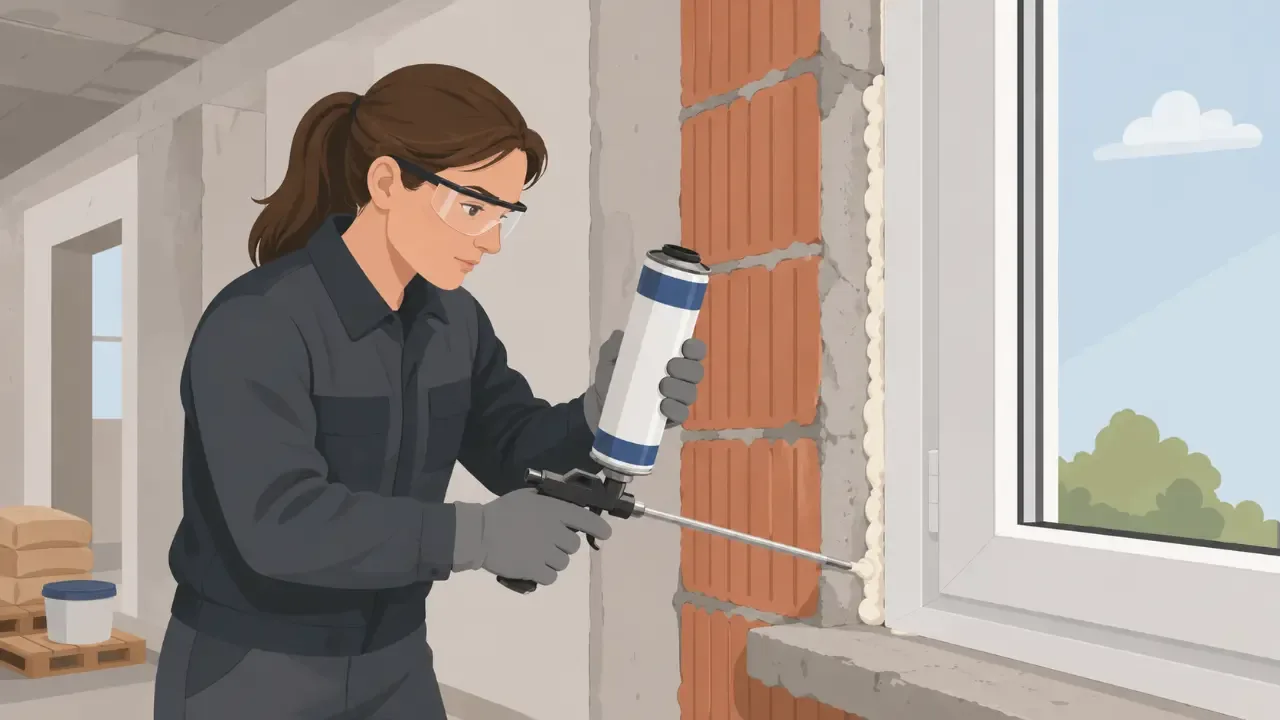
Diisocyanates - Adhesives and Sealants
PU foams, adhesives and sealants: sensitisation, hygiene, protective gloves and first aid. This online training on diisocyanates teaches the most important safety rules for processing adhesives and sealants at room temperature in a compact and practical way. It shows how diisocyanates enter the body, how sensitisation develops and which hygiene and protective measures help avoid contact at work. Who is this training for? This mandatory instruction is aimed at users who work with products containing diisocyanates such as adhesives, PU foams, joint sealants or coatings, for example in the trades and on construction sites. It is suitable as initial instruction before first use and as annual safety instruction for refresher purposes. What do participants learn? The online instruction covers the key health hazards of diisocyanates and the appropriate protective measures. A particular focus is on avoiding skin and respiratory contact. An overview of the contents: Basics: occurrence of diisocyanates, uptake through skin, eyes, airways and swallowing, odour as an unreliable warning sign Health hazards: how sensitisation develops, signs and symptoms, asthma, eczema and eye irritation, what to do if symptoms occur Hygiene and protective equipment: butyl rubber or nitrile protective gloves, safety glasses, protective clothing, skin protection, good ventilation, removing gloves correctly Safe use: avoiding contact via contaminated surfaces, protecting bystanders on the construction site, checklist First aid and disposal: eye rinsing, skin contact, curing liquid residues, disposal according to the safety data sheet Instruction under the ASchG & proof of completion The content is based on the obligation to provide instruction under Section 14 of the Austrian Workers' Protection Act (ArbeitnehmerInnenschutzgesetz, ASchG). After completing the course, participants receive a certificate documenting the completed safety instruction. The training is also ideal as a supplement to in-person instruction.10 languages
From €10.00Excl. VAT
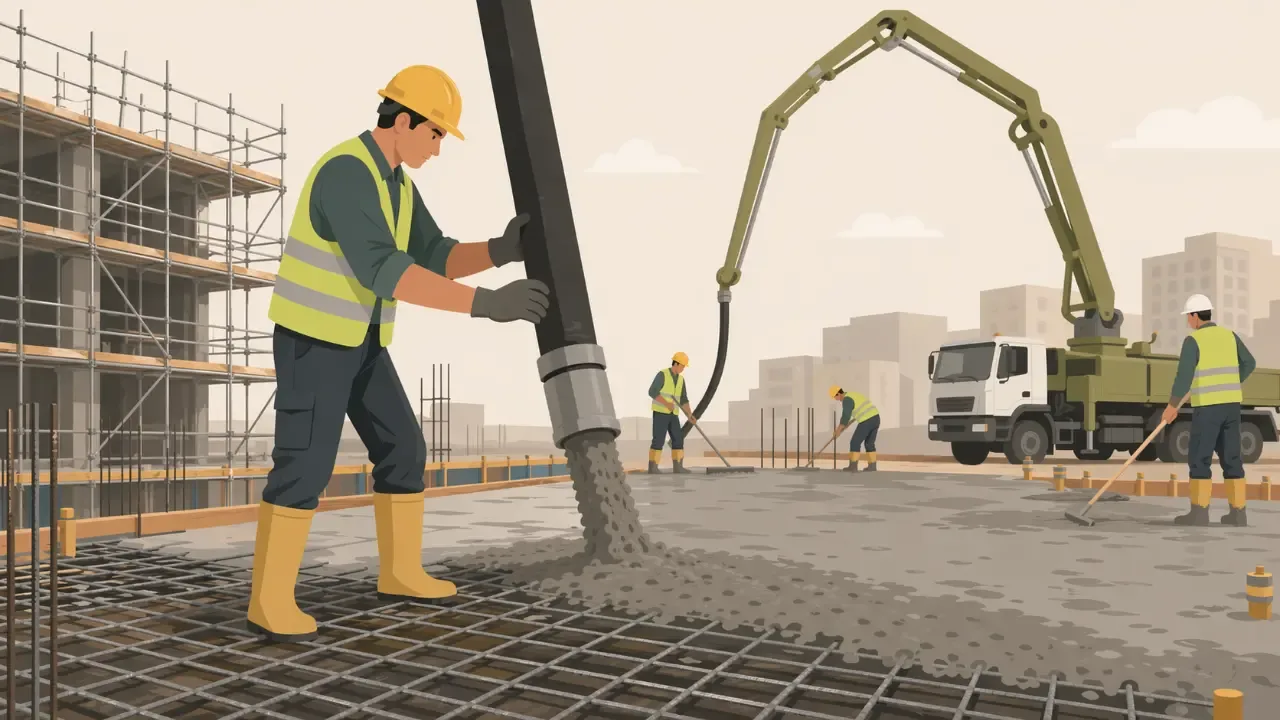
Formwork - Reinforcement - Concreting
Formwork, stripping, slinging reinforcement, concrete pump, fresh concrete and fall protection. This online safety instruction for formwork, reinforcement and concreting teaches employees in concrete construction the most important safety rules for everyday work on the construction site in a compact and practical way. It ranges from the safe erection and stripping of formwork and the storage and lifting of reinforcing steel to concreting with the pump and compaction. Who is this training for? This mandatory instruction is aimed at employees in building and concrete construction who carry out formwork, reinforcement and concreting work. It is suitable as initial instruction for new employees and as annual safety instruction for refresher purposes. Apprentices are also informed about the stricter fall protection rules that apply to them. What do participants learn? The online instruction covers the key hazards of formwork, reinforcement and concreting work. A particular focus is on safe crane lifting and fall protection. An overview of the contents: Formwork: erection according to manufacturer's instructions, bracing wall formwork panels, release agent, slinging and storing formwork panels, ban on climbing the formwork Stripping: order by the supervisor, stripping times, no tearing loose with the crane, removing protruding nails, mandatory hard hats Reinforcement: securing vertical reinforcing bars, storing reinforcement mesh, slinging long steel bars, chain angle and spreader beam Concreting: concrete pump and end hose, danger zone during priming, communication with the pump operator, compaction with the poker vibrator Fall protection: openings and fall edges, work above 2 m fall height, special rules for apprentices Personal protective equipment: safety boots, liquid-proof gloves, safety glasses, eyewash bottle for corrosive fresh concrete Instruction under the ASchG & proof of completion The content is based on the obligation to provide instruction under Section 14 of the Austrian Workers' Protection Act (ArbeitnehmerInnenschutzgesetz, ASchG). After completing the course, participants receive a certificate documenting the completed safety instruction. The training is also ideal as a supplement to in-person instruction.12 languages
From €10.00Excl. VAT
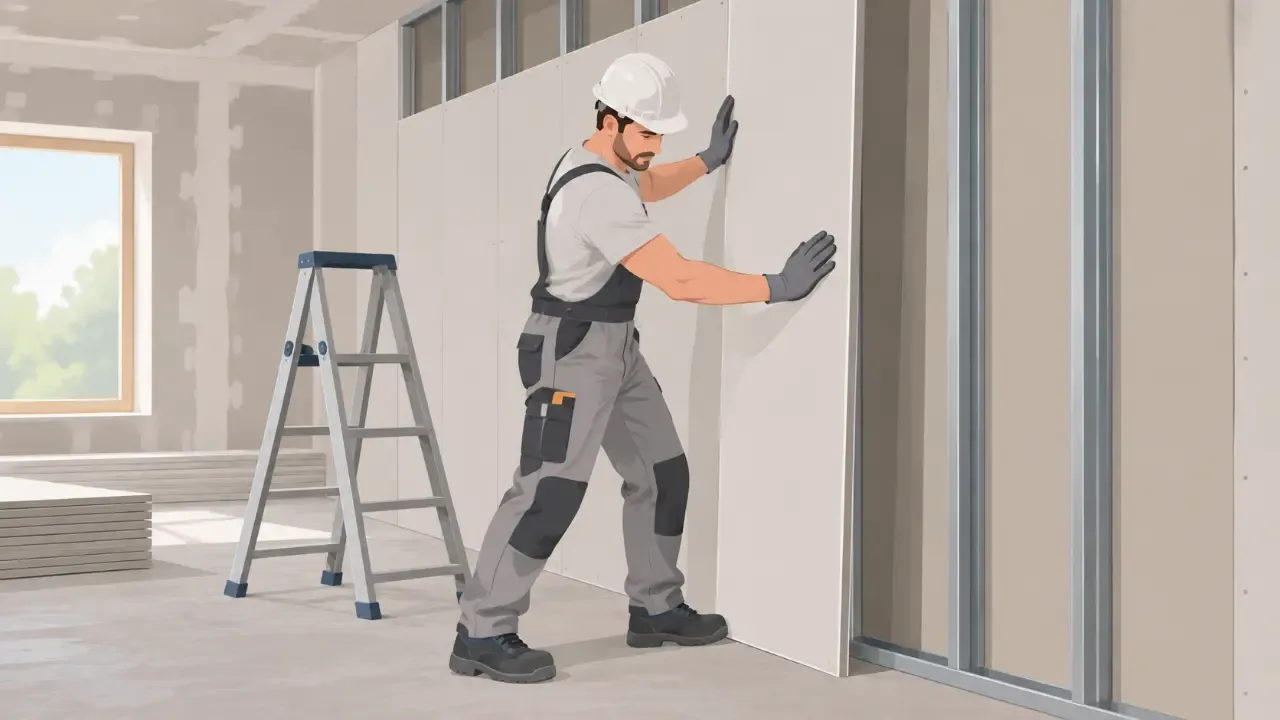
General construction site safety – drywall fitters
Plasterboard, panel lifters, metal studs, sanding dust, mineral wool and suspected asbestos. This online safety instruction for drywall installers teaches the most important safety rules for everyday work on the construction site in a compact and practical way. It combines general construction site safety such as fall protection, ladders and scaffolding with trade-specific topics: from storing, carrying and cutting plasterboard and ceiling installation to low-dust filling and sanding. Who is this training for? This mandatory instruction is aimed at drywall installers who work on construction sites and in the refurbishment of existing buildings. It is suitable as initial instruction for new employees and as annual safety instruction for refresher purposes. What do participants learn? The online instruction covers the key topics of occupational safety in drywall construction. A particular focus is on the safe handling of boards, profiles and dust. An overview of the contents: Boards and profiles: storing, carrying and cutting plasterboard, cutting metal studs, drywall screwdrivers, ceiling installation with panel lifters Working at height: fall protection, leaning ladders and stepladders, scaffolding, erecting and moving mobile scaffold towers Dust and insulation materials: gypsum dust and respirable crystalline silica, filling and sanding with a construction dust extractor, mineral wool, unknown building materials and suspected asbestos during refurbishment Hazardous substances and skin protection: mixing joint compounds, adhesives and sealants, safety data sheet, skin protection Machines and construction site: angle grinders, drilling and locating cables and pipes, electrical accidents and residual current devices (RCDs), hot work, load securing Personal protective equipment: safety shoes, eye protection, cut-resistant and chemical-resistant gloves, hearing protection, respiratory protection, knee protection Instruction under the ASchG & proof of completion The content is based on the obligation to provide instruction under Section 14 of the Austrian Workers' Protection Act (ArbeitnehmerInnenschutzgesetz, ASchG). After completing the course, participants receive a certificate documenting the completed safety instruction. The training is also ideal as a supplement to in-person instruction.12 languages
From €10.00Excl. VAT
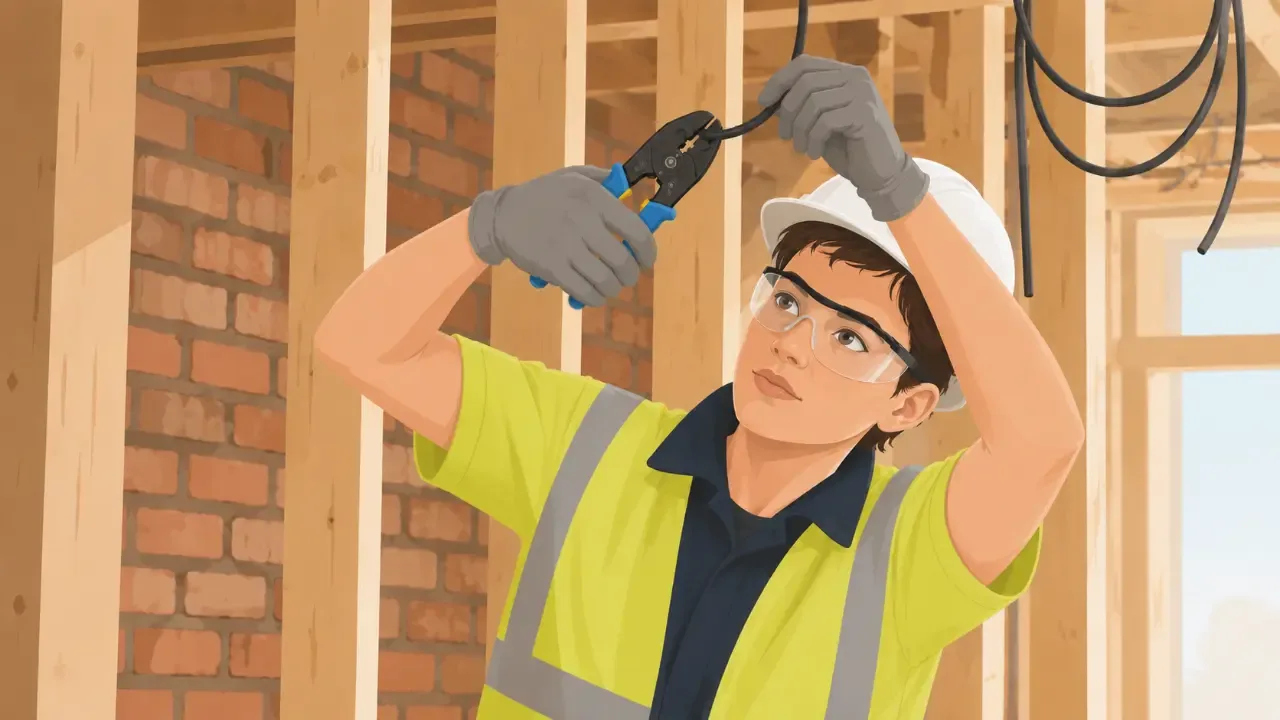
General Construction Site Safety – Electricians
5 safety rules, proper terminating, temporary site power, ladders, scaffolding and quartz dust. This online safety instruction for electricians on the construction site teaches the most important safety rules for everyday work in a compact and practical way. It combines general construction site safety such as fall protection, ladders and scaffolding with electrical engineering topics: from the 5 safety rules and proper stripping and terminating to a safe construction site power supply. Who is this training for? This mandatory instruction is aimed at electricians and qualified electrical workers who work on construction sites and in existing buildings. It is suitable as initial instruction for new employees and as annual safety instruction for refresher purposes. What do participants learn? The online instruction covers the key topics of construction site safety. A particular focus is on working safely with electricity. An overview of the contents: Electrical safety: 5 safety rules, verifying the absence of voltage with a two-pole voltage tester, construction site distribution boards and residual current devices (RCDs), first aid after electrical accidents Professional installation: stripping, wire end ferrules and crimping, terminating, cable pulling, wiring in control cabinets Fall protection: guardrails, floor openings, leaning ladders and stepladders, scaffolding and mobile aluminium scaffold towers Tools and machines: drilling and chiselling, wall chasers, angle grinders, cutting tools, lithium-ion batteries Hazards on the construction site: quartz dust, hazardous substances, hot work, load securing, lifting and carrying Personal protective equipment: S3 safety shoes, safety glasses, protective gloves, hearing protection, FFP2 mask Instruction under the ASchG & proof of completion The content is based on the obligation to provide instruction under Section 14 of the Austrian Workers' Protection Act (ArbeitnehmerInnenschutzgesetz, ASchG). After completing the course, participants receive a certificate documenting the completed safety instruction. The training is also ideal as a supplement to in-person instruction.12 languages
From €10.00Excl. VAT
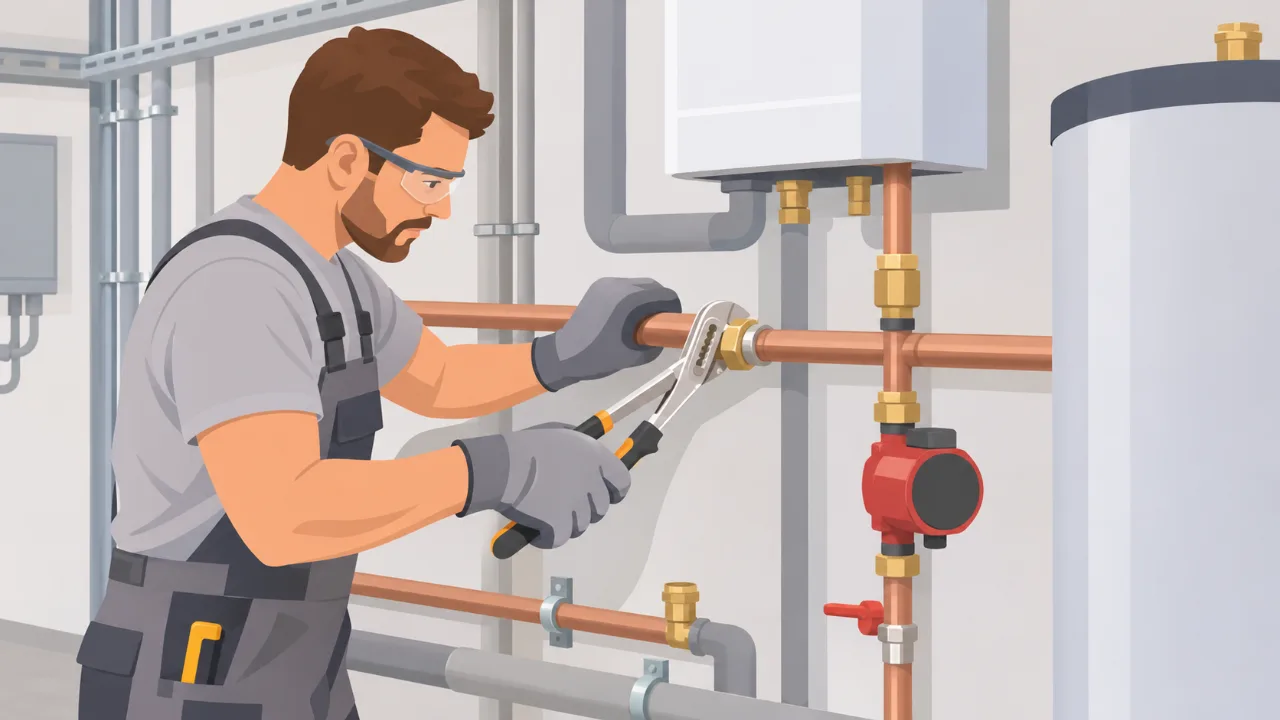
General construction site safety for installers
Gas installations, refrigerants, press fitting, soldering, shafts, roof work and work on existing systems. This online safety instruction for plumbers and HVAC installers teaches the most important safety rules for installation work in plumbing, heating, ventilation and gas in a compact and practical way. It ranges from working at height, pipe processing and hot work to safe work on existing systems. Who is this training for? This mandatory instruction is aimed at installers in plumbing, heating, ventilation and gas engineering who work on construction sites and in existing buildings. It is suitable as initial instruction for new employees and as annual safety instruction for refresher purposes. What do participants learn? The online instruction covers the key topics of occupational safety for plumbers and HVAC installers. A particular focus is on working on pipes and systems. An overview of the contents: Pipe processing and machines: pipe cutting, pipe threading machine, press fitting tool, butt fusion welding machine, core drill, drain cleaning machine Hot work and gases: gas cylinders, torches and gas hoses, soldering and gas cartridges, welding fumes, fire protection Work on systems: isolating and depressurising, pressure testing, gas installations and gas leaks, heat pumps and refrigerants, carbon monoxide in boiler rooms Working at height: fall protection, roof work, ladders, scaffolding and mobile scaffold towers Special hazards: equipotential bonding when cutting pipes, quartz dust, wastewater and hygiene, suspected asbestos, shafts and confined spaces, heat Emergencies and PPE: electrical accidents, emergency calls and fire, respiratory protection, eye, hand and hearing protection Instruction under the ASchG & proof of completion The content is based on the obligation to provide instruction under Section 14 of the Austrian Workers' Protection Act (ArbeitnehmerInnenschutzgesetz, ASchG) as well as on the Construction Workers' Protection Ordinance (Bauarbeiterschutzverordnung, BauV) and the Work Equipment Ordinance (Arbeitsmittelverordnung, AMVO). The qualification under the F-Gas Regulation for work on the refrigerant circuit is not replaced by this instruction. After completing the course, participants receive a certificate documenting the completed safety instruction. The training is also ideal as a supplement to in-person instruction.12 languages
From €10.00Excl. VAT
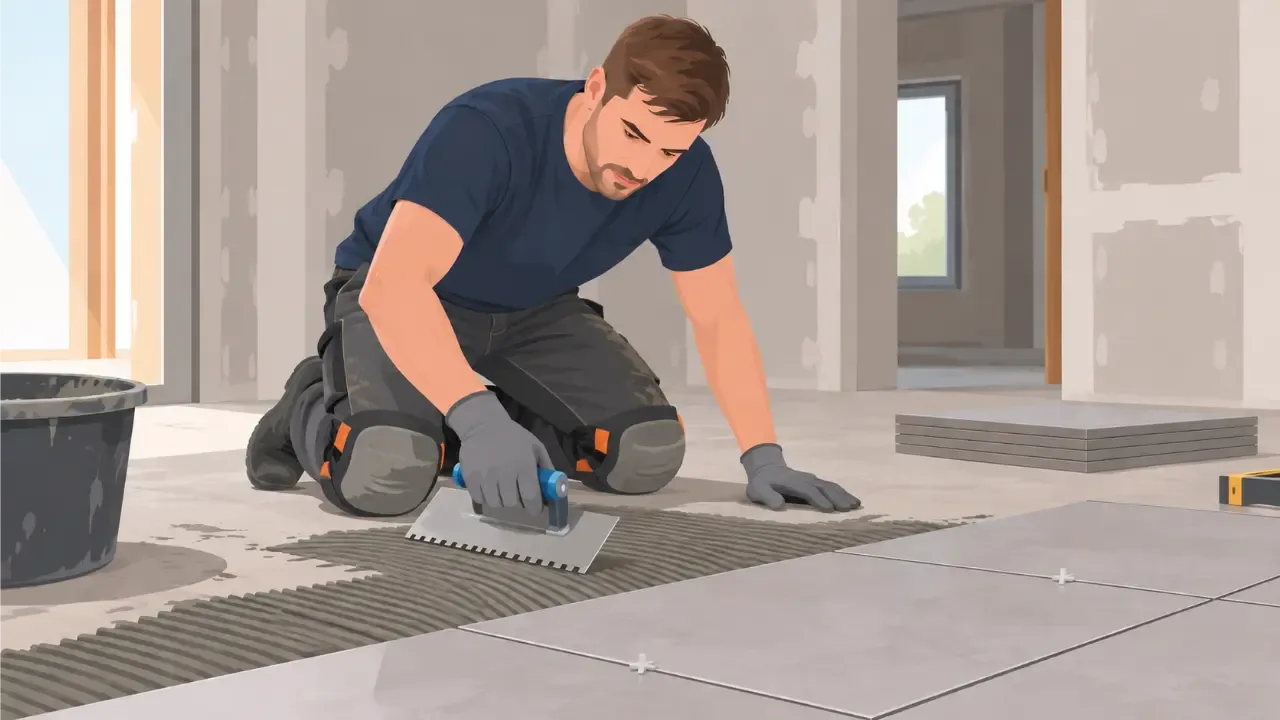
General Construction Site Safety – Tilers
Large-format tiles, stone cutting machine, quartz dust, tile adhesive, knee protection and scaffolding. This online safety instruction for tilers on the construction site teaches the most important safety rules for everyday work in a compact and practical way. It combines general construction site safety such as fall protection, ladders and scaffolding with trade-specific topics: from transporting large-format tiles and slabs and low-dust cutting to mixing tile adhesive. Who is this training for? This mandatory instruction is aimed at tilers who work on construction sites. It is suitable as initial instruction for new employees and as annual safety instruction for refresher purposes. What do participants learn? The online instruction covers the key topics of construction site safety. A particular focus is on the typical strains and hazards of tile laying. An overview of the contents: Tiles and slabs: transporting large-format slabs with vacuum lifters, pallet trucks, risk of cuts from broken edges, crushing hazards Machines and tools: stone cutting machine and wet cutting, angle grinders, electric power tools, mixing paddles, lithium-ion batteries Dust and hazardous substances: quartz dust and low-dust working, cement and tile adhesive, skin protection, safety data sheets Ergonomics: lifting and carrying, knee protection when kneeling, changing working positions Construction site and fall protection: guardrails, floor openings, ladders, mobile scaffold towers, hot work, electrical accidents Personal protective equipment: S3 safety shoes, safety glasses, protective gloves, hearing protection, FFP2 mask, mandatory hard hats during crane operation Instruction under the ASchG & proof of completion The content is based on the obligation to provide instruction under Section 14 of the Austrian Workers' Protection Act (ArbeitnehmerInnenschutzgesetz, ASchG). After completing the course, participants receive a certificate documenting the completed safety instruction. The training is also ideal as a supplement to in-person instruction.12 languages
From €10.00Excl. VAT
Load Overhangs
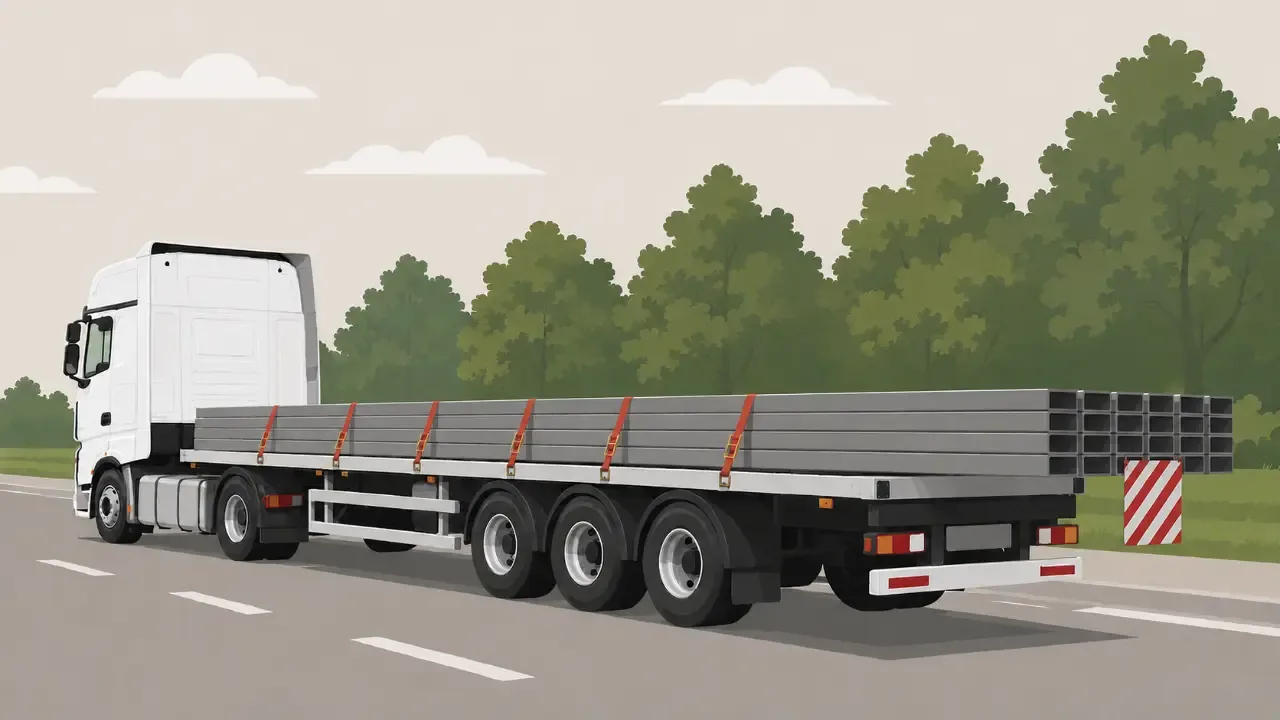
Excess length, excess width, height, long loads and marking of projecting loads in Austria and Germany. This online safety instruction on overall dimensions and projecting loads teaches the most important rules for transports without a special permit in a compact way. It shows which height, width and length vehicle and load may reach in Austria and Germany, when a load counts as a long load transport and how projecting loads are marked correctly. Who is this training for? This mandatory instruction is aimed at drivers of cars and trucks who transport loads with excess length or width. It is suitable as initial instruction for new employees and as annual safety instruction for refresher purposes. What do participants learn? The online instruction covers the key requirements for load dimensions and projecting loads in road traffic. A particular focus is on correct marking. An overview of the contents: Dimensions in Austria: maximum height and width including load, lateral projection, excess length to the front and rear Long load transport: definition, maximum permitted speeds, marking, threshold for a special permit Regulations in Germany: permitted width, height and length, projection to the front, rear and side Marking: warning sign, flag, plate or cylindrical marker, lamp and reflector at dusk and in poor visibility General obligations: covering dangerous points and edges, load securing, axle loads and gross weight, driver's responsibility Instruction under the ASchG & proof of completion The content is based on the obligation to provide instruction under Section 14 of the Austrian Workers' Protection Act (ArbeitnehmerInnenschutzgesetz, ASchG). In addition, road traffic requirements for Austria and Germany are covered. After completing the course, participants receive a certificate documenting the completed safety instruction. The training is also ideal as a supplement to in-person instruction and practical exercises.12 languages
From €10.00Excl. VAT
Load Securing
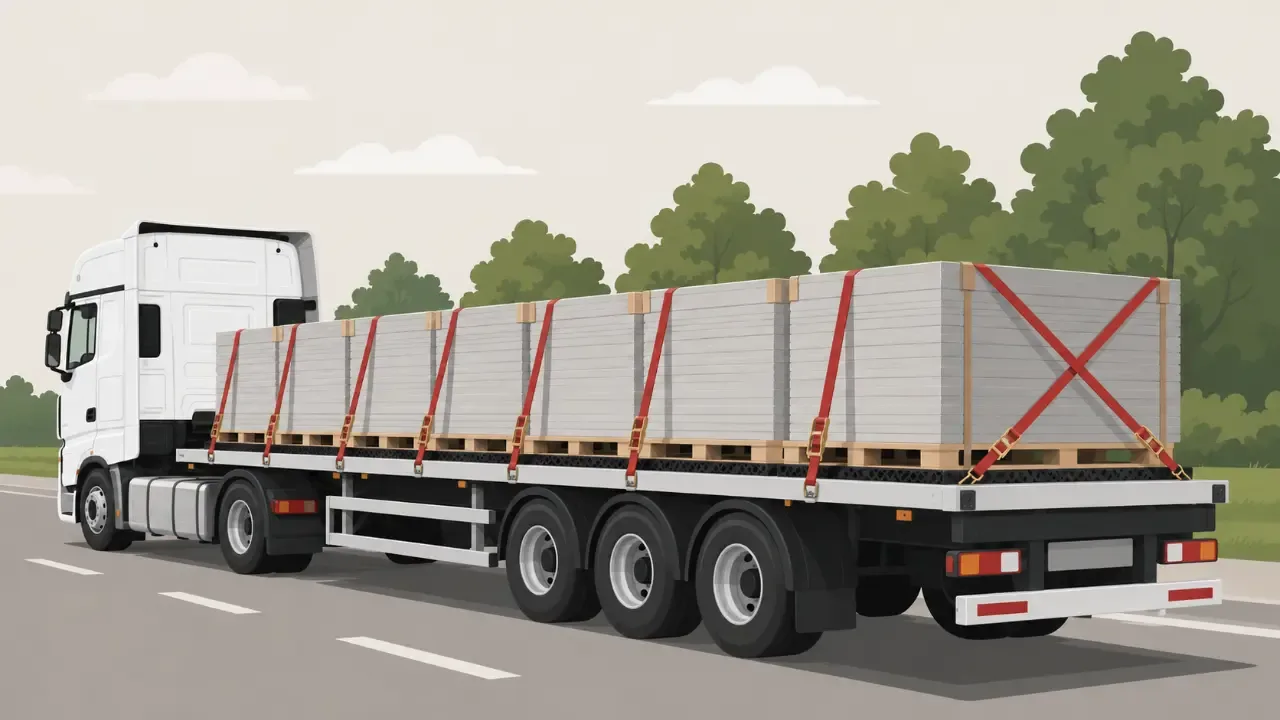
Form-fit securing, tie-down lashing, lashing angle, friction coefficient, load plan and lashing gear. This online safety instruction on load securing in trucks teaches the most important basics for safe road freight transport in a compact and easy-to-understand way. It ranges from responsibilities and acting forces to the types of load securing, load distribution, axle loads and the calculation of the required securing forces. Who is this training for? This mandatory instruction is aimed at truck drivers as well as loaders and all other persons involved in loading and load securing. It is suitable as initial instruction for new employees and as annual safety instruction for refresher purposes. What do participants learn? The online instruction covers the key topics of load securing in road transport. A particular focus is on choosing and calculating the right securing method. An overview of the contents: Basics and responsibility: duties of driver, vehicle owner and loader, acceleration, centrifugal and vertical forces, weight force Types of load securing: form-fit securing, head lashing, loop lashing, diagonal lashing, frictional securing by tie-down lashing, edge protectors Friction and load distribution: friction coefficient and anti-slip mats, reading a load distribution plan, load centre of gravity, axle loads, partial unloading Vehicle and lashing equipment: suitable vehicle and body, lashing points, labelling of lashing straps, LC, STF and SHF Calculation in practice: securing forces to the front, side and rear, influence of the lashing angle, calculation examples for tie-down and diagonal lashing Instruction under the ASchG & proof of completion The content is based on the obligation to provide instruction under Section 14 of the Austrian Workers' Protection Act (ArbeitnehmerInnenschutzgesetz, ASchG). After completing the course, participants receive a certificate documenting the completed safety instruction. The training is also ideal as a supplement to in-person instruction and practical exercises.12 languages
From €10.00Excl. VAT
Companies already using TS-Learn


